AI-Powered Content Creation Workflow for Marketers
AI-Powered Content Creation Workflow for Marketers 2025
Content marketing has always been about consistency, creativity, and impact. In 2025, artificial intelligence has become a transformative partner for marketers, enabling faster production, smarter targeting, and higher efficiency. But to truly benefit, marketers need more than just AI tools—they need a workflow that integrates AI seamlessly into their content strategy.

This article explores the AI-powered content creation workflow for marketers in 2025, from ideation to publishing, and how to build routines that maximize efficiency without losing authenticity.
Step 1: Research and Ideation
AI excels at analyzing massive amounts of data. Tools in 2025 can scan search trends, competitor blogs, and social media to suggest content ideas that resonate with audiences. For example, marketers can input a target keyword, and AI will generate related long-tail topics with high search potential. This eliminates guesswork and ensures that every piece of content aligns with real demand.
Routine tip: Schedule weekly AI-assisted research sessions to keep your content calendar fresh and aligned with evolving trends.
Step 2: Drafting and Outlining
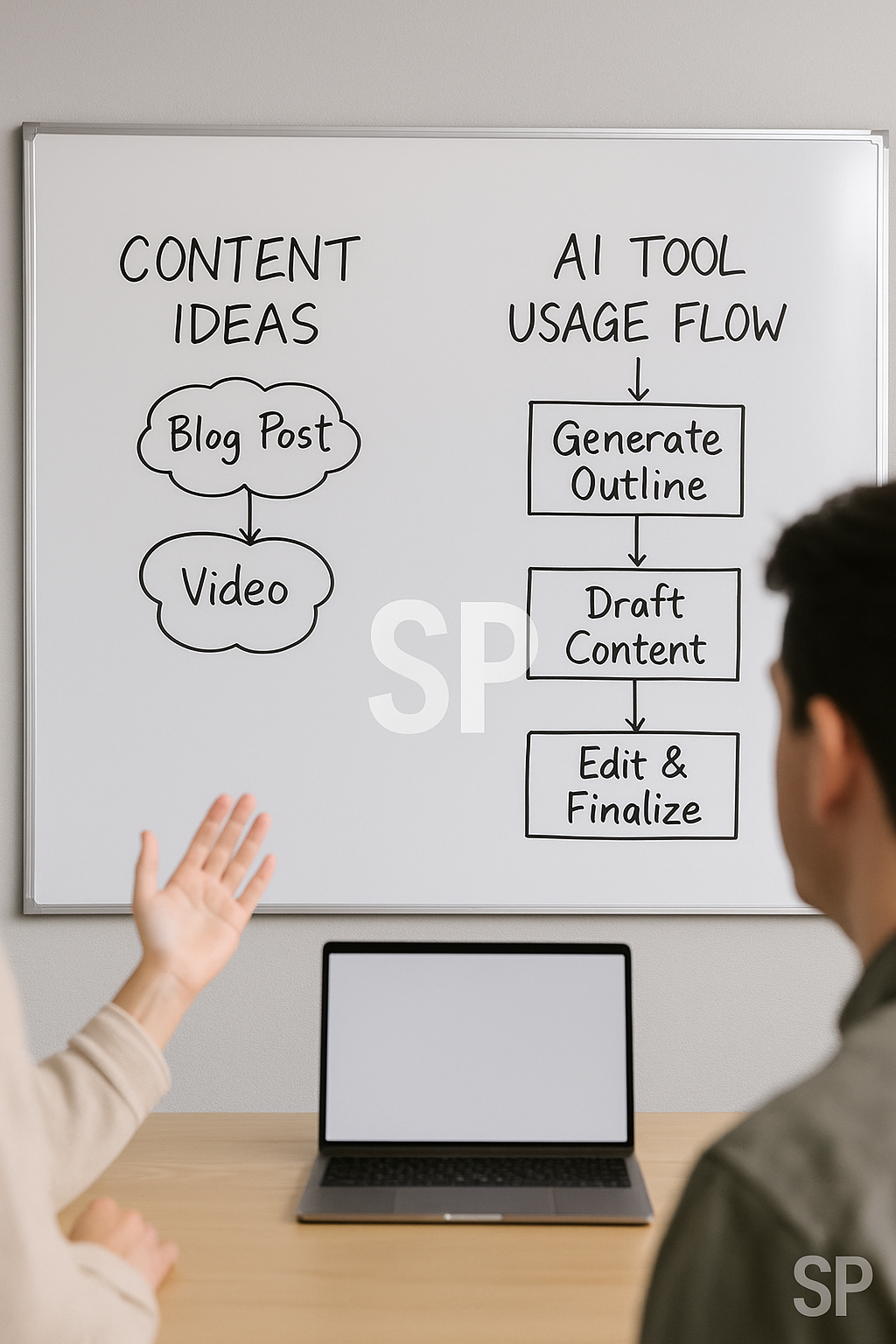
Gone are the days when marketers started with a blank page. AI writing assistants now create detailed outlines, complete with suggested headings, key points, and even word count recommendations. Marketers can then adjust these outlines to match their brand’s voice and goals.
Routine tip: Use AI to produce a first draft quickly, but always refine with human insights to add nuance, storytelling, and credibility.
Step 3: Content Generation
AI text generators have matured significantly by 2025. They can produce blog posts, ad copy, and even scripts with remarkable fluency. Visual content creation has also advanced—AI can design infographics, social media graphics, and short-form videos tailored to audience preferences.
Routine tip: Create templates for recurring formats (blogs, newsletters, reels) and let AI fill in the base content, saving time while maintaining consistency.
Step 4: Editing and Optimization
AI editing tools now act like full-scale editors. They check grammar, readability, tone, SEO optimization, and even cultural sensitivity. Advanced models also adapt to brand guidelines, ensuring consistent voice across all platforms.
Routine tip: Always run content through AI optimization before publishing, then conduct a manual review for final approval.
Step 5: Distribution and Personalization

AI-powered scheduling tools allow marketers to distribute content at optimal times across channels. More importantly, AI personalizes messaging for different audience segments. A blog post might have multiple introductions depending on the reader’s location, industry, or previous interactions.
Routine tip: Automate multi-channel publishing while tracking performance metrics in real time.
Step 6: Analytics and Feedback
The workflow doesn’t end with publishing. AI analytics tools measure engagement, conversions, and sentiment. They also provide actionable recommendations—suggesting which topics to expand into eBooks or which videos to repurpose as shorts.
Routine tip: Conduct monthly AI-assisted performance reviews and adjust content strategy accordingly.
Building a Sustainable Workflow
The true value of AI lies in routine integration. Marketers who succeed in 2025 don’t treat AI as an occasional helper but as a consistent part of their content process. By embedding AI into daily tasks—research, drafting, optimization, and distribution—they achieve more output with less stress.
At the same time, balance is critical. AI handles efficiency, but human creativity ensures authenticity. Marketers who combine both create content that resonates deeply while scaling effectively.
Final Thoughts
An AI-powered content creation workflow in 2025 empowers marketers to move beyond the struggle of deadlines and writer’s block. It provides structure, insight, and scalability—while leaving room for creativity and strategy.
By adopting AI not just as a tool but as part of a routine, marketers unlock consistent growth and sustainable success. In the fast-paced digital world, those who master this workflow will lead the way.
In the main article, we explored the steps of an AI-powered content creation workflow: research, drafting, optimization, distribution, and analytics. To extend this discussion, let’s go deeper into the practical routines marketers can adopt in 2025 to truly unlock the potential of AI, while avoiding common pitfalls.
One of the first lessons marketers learn is that AI is not a replacement for creativity—it’s a partner. AI can suggest topics and generate drafts, but audiences can quickly detect when content lacks authenticity. The most effective workflows combine AI’s speed with a human touch. For example, an AI may generate a blog draft in minutes, but a marketer adds case studies, humor, or cultural references that resonate with readers. This balance maintains trust and ensures content doesn’t feel generic.
Another important practice is iterative refinement. Instead of producing a final product in one go, successful marketers use AI in cycles. First, generate an outline. Next, produce a rough draft. Then refine with AI editing tools, and finally review manually. This multi-step loop keeps content sharp while leveraging automation for efficiency.
Workflow integration is also key. Many solopreneurs and small teams struggle with tool overload—jumping between writing apps, design platforms, and analytics dashboards. In 2025, integrated ecosystems are solving this issue. By centralizing workflows in a single AI-enabled hub, marketers save time and reduce friction. Routine tip: consolidate your stack—use fewer tools, but maximize automation within them.

On the distribution side, hyper-personalization has become a game-changer. AI can adapt content not just by channel but by individual user profiles. A single email campaign may generate 10 different versions based on audience interests, behavior, and location. Marketers who build personalization into their workflow see higher engagement and conversions. However, they must also monitor ethical boundaries, ensuring personalization doesn’t cross into invasiveness.
Analytics and feedback loops complete the cycle. Instead of relying only on vanity metrics like clicks, AI now evaluates deeper insights: dwell time, sentiment, and even emotional response. Marketers should set a routine of monthly reviews, where AI suggests actionable improvements—such as repurposing high-performing blogs into videos, or adjusting tone for specific demographics.
Finally, sustainability matters. AI can generate huge volumes of content, but more is not always better. The most successful marketers in 2025 adopt a quality-over-quantity mindset. They use AI to streamline workflows, but focus on producing fewer, more impactful pieces of content that align with long-term strategy.
In summary, an AI-powered content creation workflow in 2025 is not just about faster production—it’s about smarter routines. Marketers who blend AI automation with human creativity, consolidate their tools, personalize ethically, and prioritize quality will build stronger connections with their audiences. By embedding these habits into daily practice, AI becomes more than a tool—it becomes a sustainable partner in long-term marketing success.